
One Man’s Experience in the Flood of 2026
On Nature Column, Herald Bulletin, by Eliot Reed
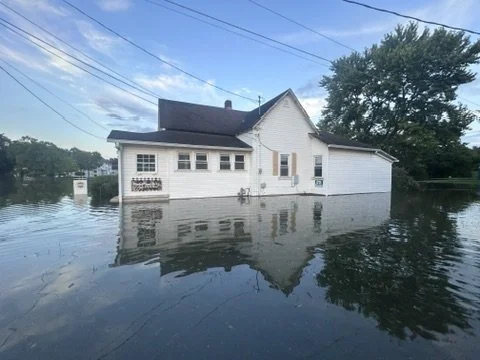
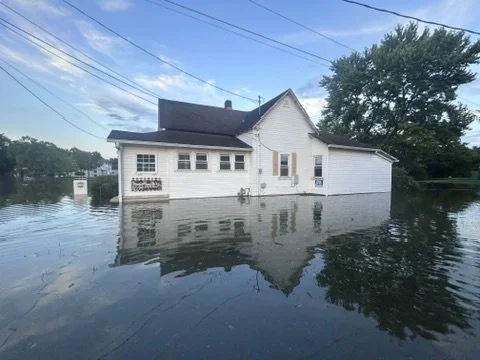
The historic flooding in Anderson and across Central Indiana has receded, but the damage and devastation left behind will no doubt linger for months.
The White River reached a record level of 24.93 feet on Aug. 15, 2026, affecting more than 600 homes and businesses in the city.
Areas hardest hit include Park Place, Alexandria Pike, the low-lying areas of Irondale and locations directly south of Derby Downs between Jackson Street and Raible Avenue.
As I write, bulldozers are driving down alleyways in Park Place, clearing away the contents of people’s homes and businesses.
More than a decade ago, I felt lucky to find a building for sale to start my business in the neighborhood where I grew up and went to elementary school and college.
A small shotgun-style lot within sight of the Blue Bridge and the Riverwalk Trail, less than a hundred yards from the right bank of White River.
For the first several years I was in business, the Army Corps of Engineers was building the new levee system basically in my backyard. For months, massive earth movers piled up dirt, creating a massive wall between the river and the Park Place neighborhood.
By early afternoon on Thursday, Aug. 13, after days of torrential rain, the Anderson Police Department went door to door with voluntary evacuation recommendations, warning that this order was likely to become mandatory later that evening.
The influx of people into Park Place to see how high the river was rising reminded me of the old days when the Anderson Free Fair would come to Athletic Park.
I ran into many friends and customers along the levee that day as I took a break from packing up artwork and other valuables and climbed the levee to check the water level. It just kept rising.
That evening, as I walked over to the levee, I noticed the ground was wet. The ground on the 8th Street side of the levee had remained dry until then.
Water was pooling in the grass adjacent to the parking lot on Ninth Street next to the trail. On closer inspection, I noticed the water was moving in a slow trickle.
I followed the stream and found that it originated from a block retaining wall in the levee that carved out an area for a large utility pole. Later that evening, I ran into the mayor on the trail as he inspected the water levels.
I pointed out the water coming out of the “dry side” of the levee, chatted for a while, and went on my way.
I originally intended to spend the night at my shop, not really knowing if there was anything I could do, but wanting to keep an eye on things throughout the night.
After seeing water seeping through the levee, the USGS (United States Geological Survey) on site, and hearing rumors that officials were concerned about a levee breach, I decided it was best to go home and return in the morning.
I awoke suddenly the next morning (Aug. 14) and headed straight for my shop. Eighth Street was already barricaded off at Park Avenue, and I could see a dumpster and a Toyota floating in the middle of the street.
I walked the levee from 10th Street into my shop; the water was nearly even with the levee’s top. At 8 a.m. I had 3.5 feet of water in my basement.
By 11 a.m. it was up to 7 feet. I loaded my kayak with a pump and hoses, waded through knee-high water the three blocks to my shop, and quickly got to work pumping, simply trying to keep the water from reaching the floors.
The levee held, but there was a real risk of failure — I later learned, in the exact spot where the water was seeping through, 250 feet from my back door.
After speaking with a colonel from the Army Corps, I was told the drains reversed and pushed water up into the neighborhood from Athletic Park. As the river receded, the water in Park Place continued rising. The water flowed into the low area of the neighborhood and could not be drained until the river passed below 19 feet.
The water began to recede by Saturday (Aug. 15).
It is an understatement to say that I am lucky. I know many people who have likely lost everything. Of the dozens of neighbors I’ve spoken to, no one has flood insurance.
It appears that responses from Andersonians aiding those most affected have been outstanding. There is a long road ahead for many, and I’m glad our community is rallying to help those in need. Keep it up, and good luck to everyone!
Eliot Reed, an Anderson native, is the owner of Park Place Arts, a custom frame shop and art gallery in Anderson. He is a founding director of Heart of the River Coalition and a monthly contributor to the weekly On Nature column.